CASE STUDY
Web-based Mobile App
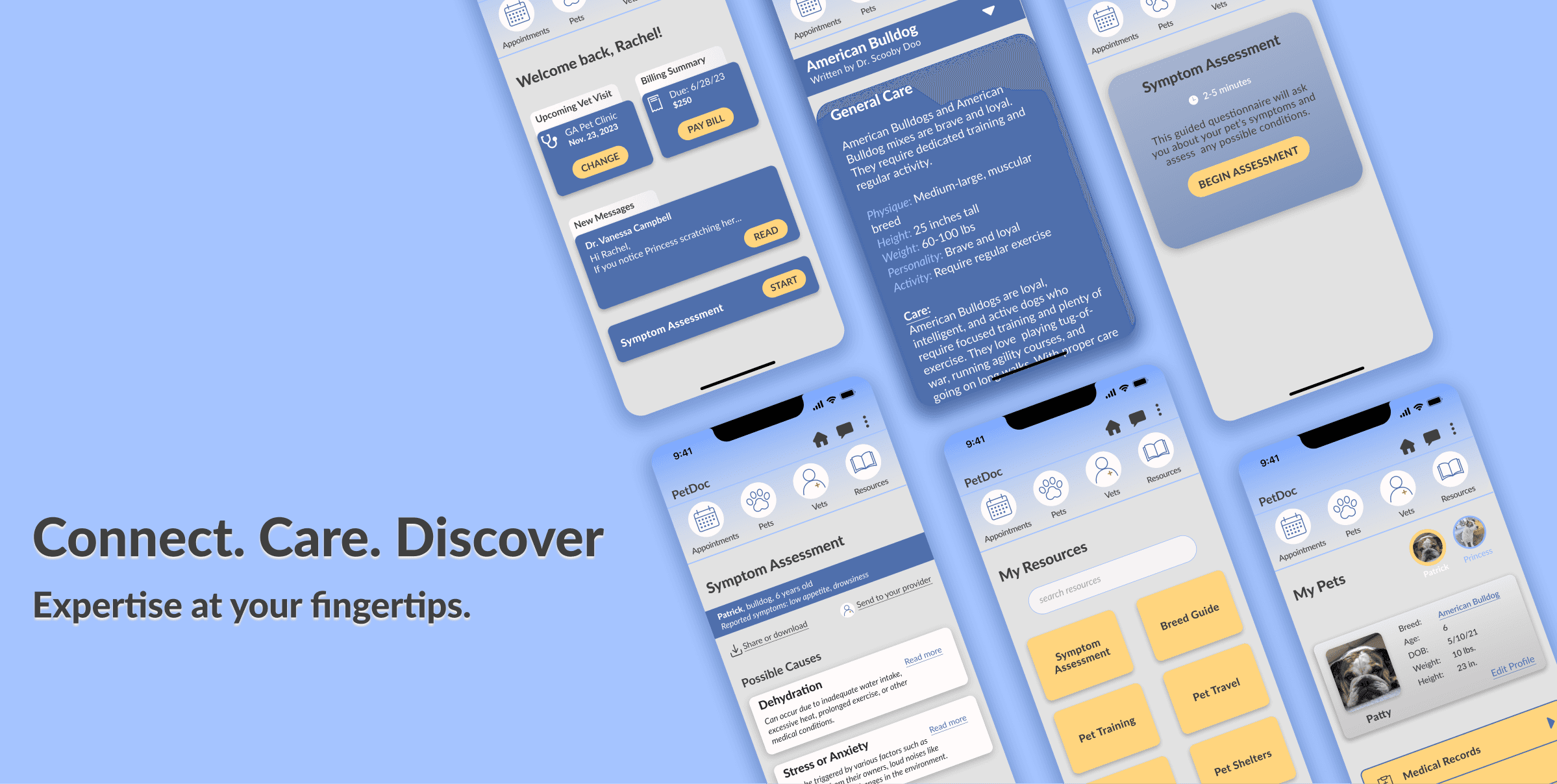
PetDoc is a creative solution our team created with the purpose of allowing pet owners to connect to their vets, manage their vet appointments, and pet’s medical records, and further understand their pet’s health needs through professionally-vetted informational resources.
Project
Hackathon - General Assembly
Duration
5 Day Sprint
Tools Used
Figma
FigJam
Miro
Slack
My Role
I collaborated closely with the Research Lead on our team to get an idea of who our target users could be and identified a couple of competitors like MyChart and PetDesk, to potentially analyze their unique features.
Asynchronously, we conducted 5 user interviews to learn about how dog owners navigate pet health and health tracking and found our initial hypothesis of the user problem to be insignificant compared to what we actually learned. Although tracking a pet’s health is important, pet owners are actually more concerned about having the means to address their health concerns.
Two of the most common methods of approaching these concerns are:
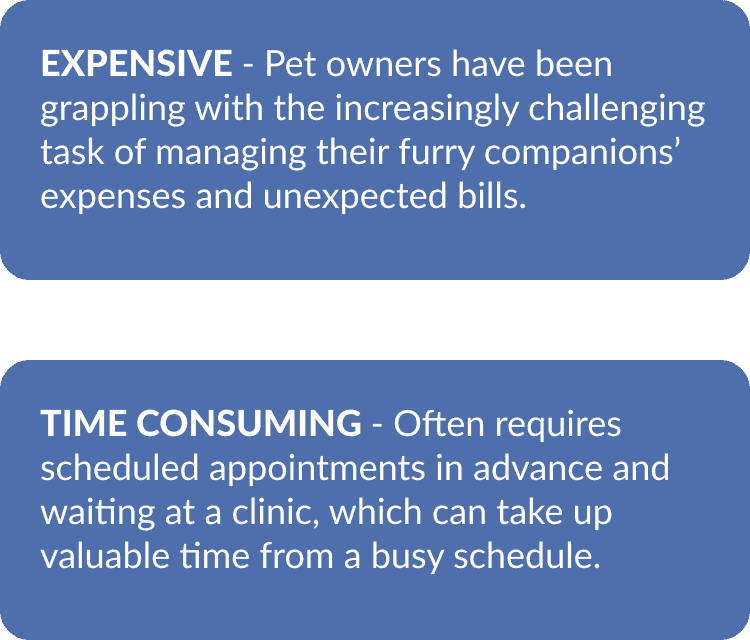
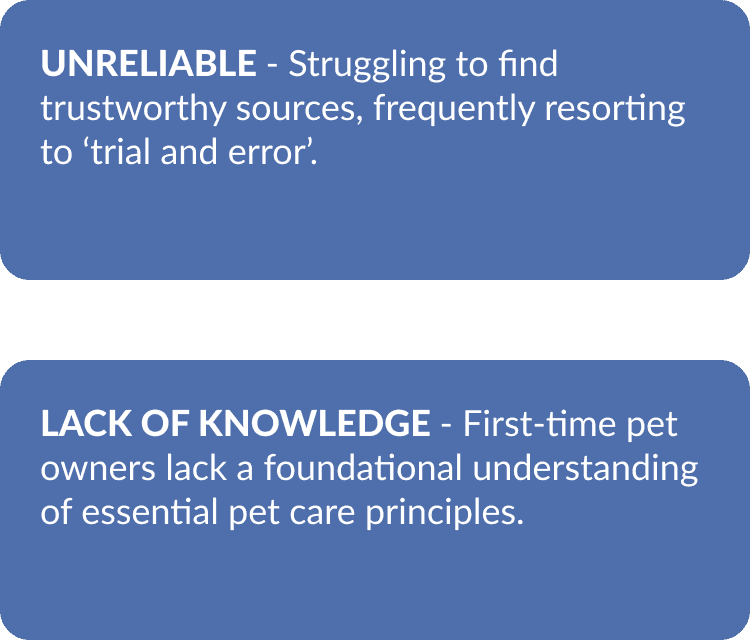
This discovery begs the question of how we can offer users a service or resource that can be just as trustworthy and reliable as their vets at a fraction of the cost. To achieve this, we created a primary persona to step into the shoes of a pet owner, helping us better understand their perspective and craft a precise problem statement:
To solve this problem, we realized that we didn’t need to reinvent the wheel at all, but to actually lean on what already works for pet owners, which is their trust in their vet. Our solution was to create a patient portal that not only connects users to their vets, but also offers streamlined research tools that are backed by a vet’s reputability, giving us a competitive advantage over portals that lack this educational component.
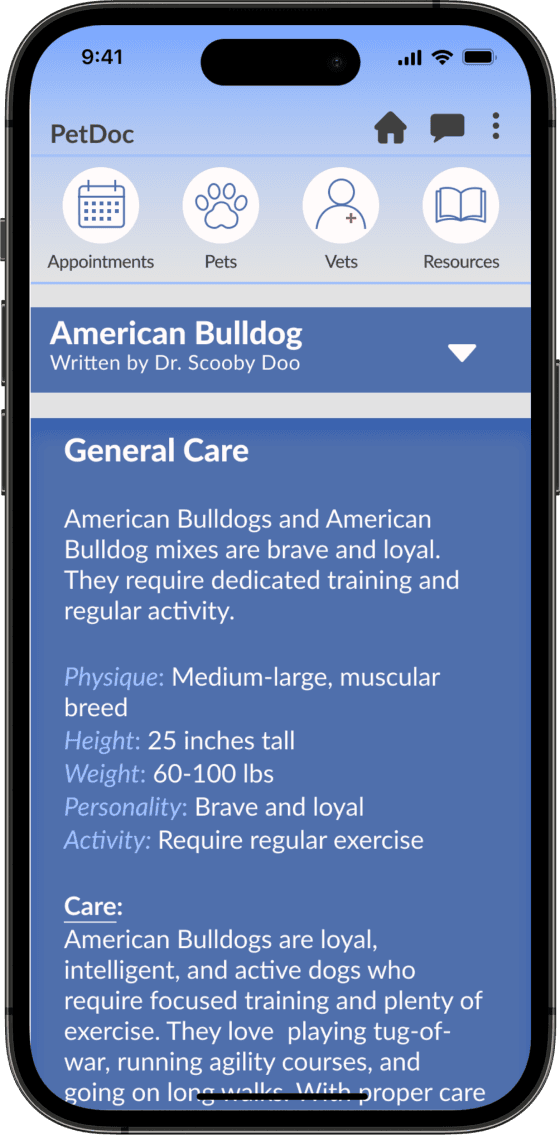
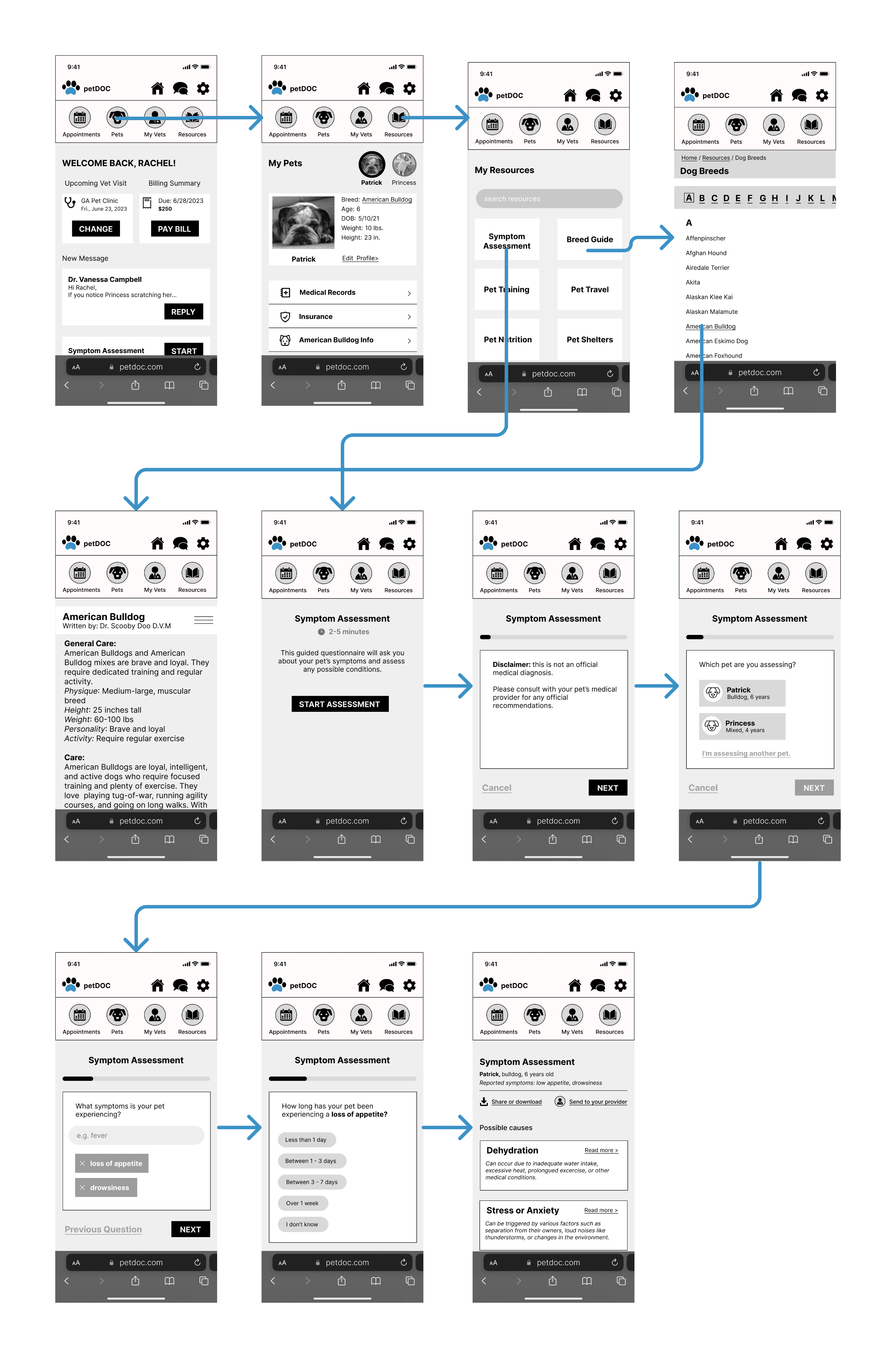
Dogs’ tend to have specific-breed health issues, and this feature nicely consolidates this information.
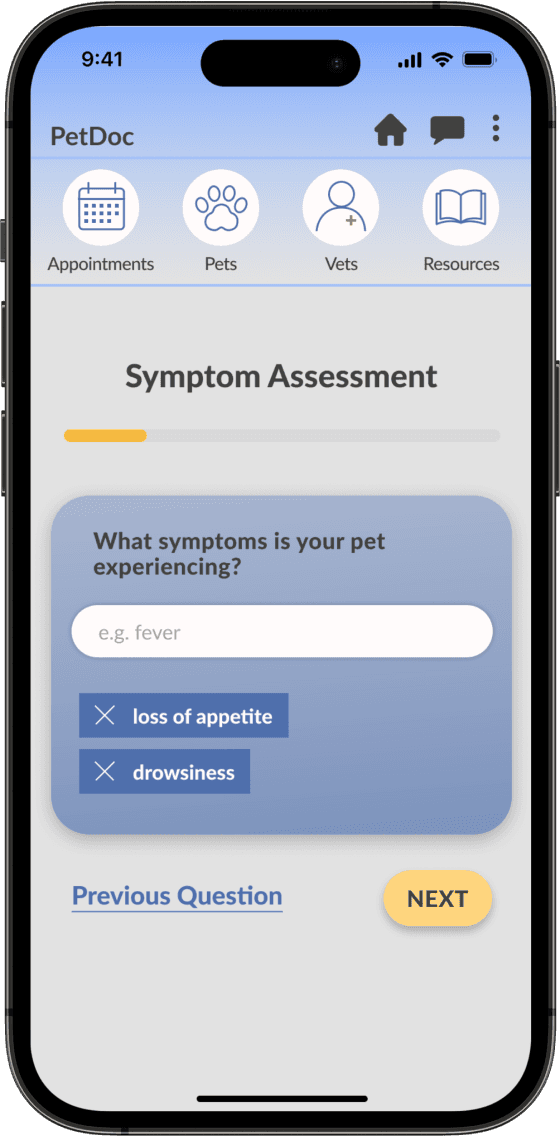
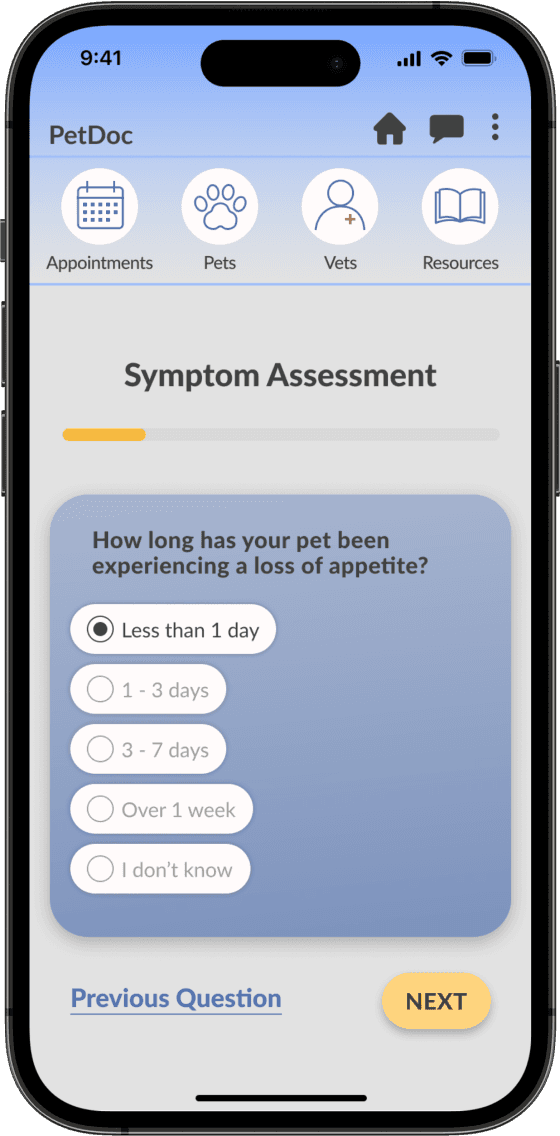
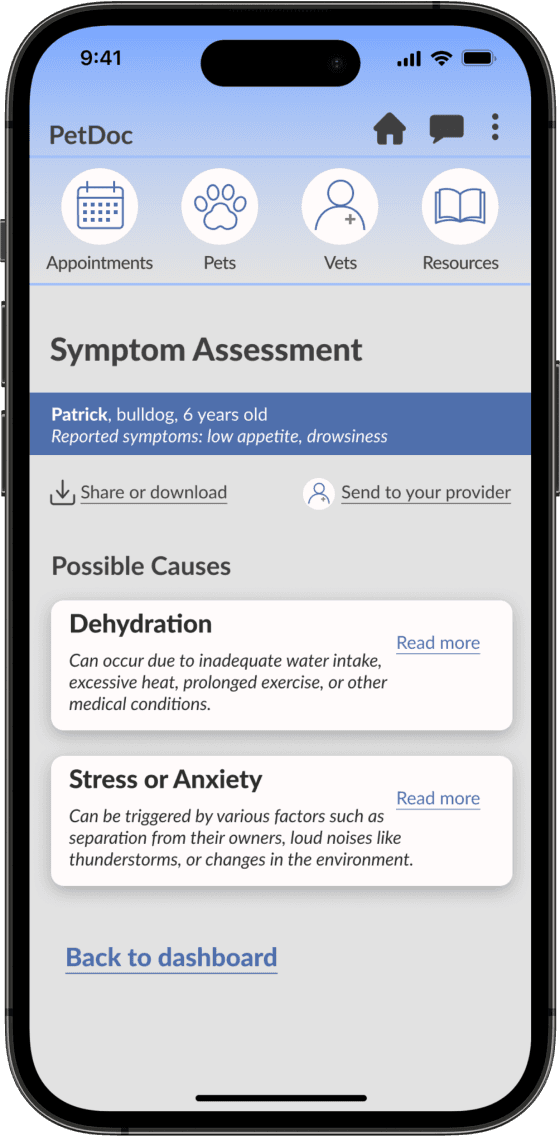
A guided AI questionnaire that generates tailored questions about a pet’s symptoms, then provides a list of potential diagnosis. It’s a cost-saving alternative to a vet-visit, and also narrows the starting point to any additional research.
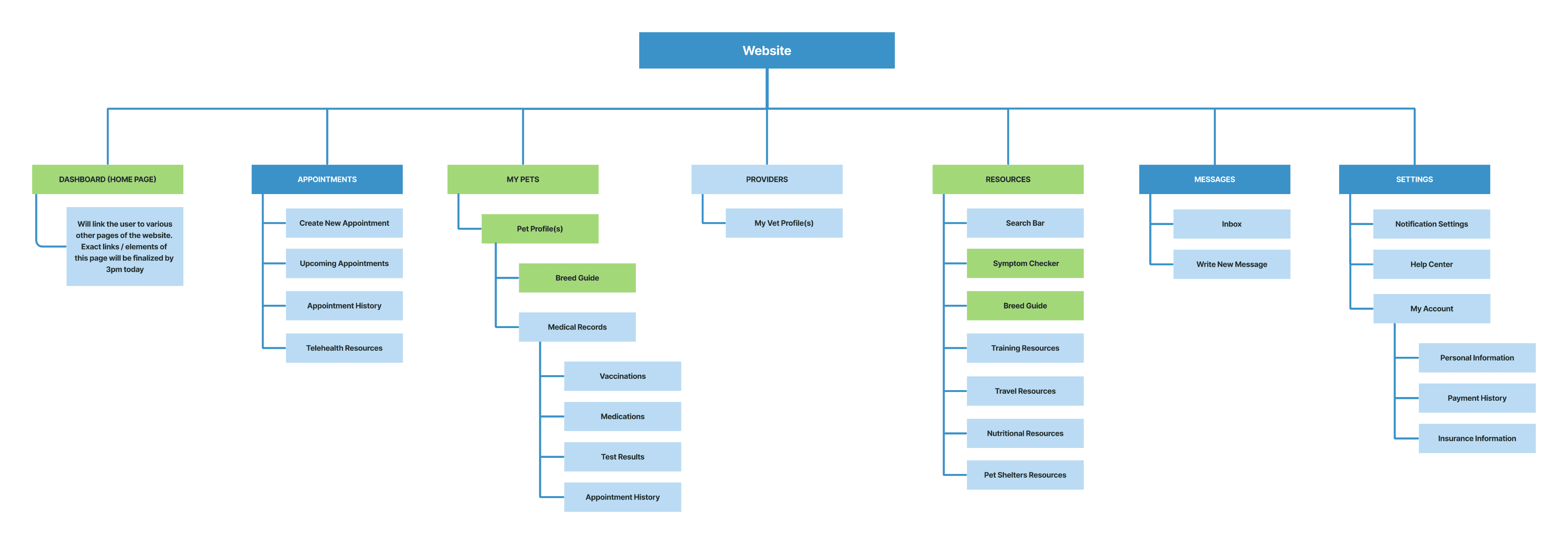
Site Map
Our team collectively decided to prioritize designing a mobile-first responsive website. Considering the time constraints and the developers’ technical constraints, we decided that deploying the designs into a mobile app would take more time and resources. Next, we considered how and when our users would mainly be using our product, and a mobile-first approach seemed the most convenient and logical.
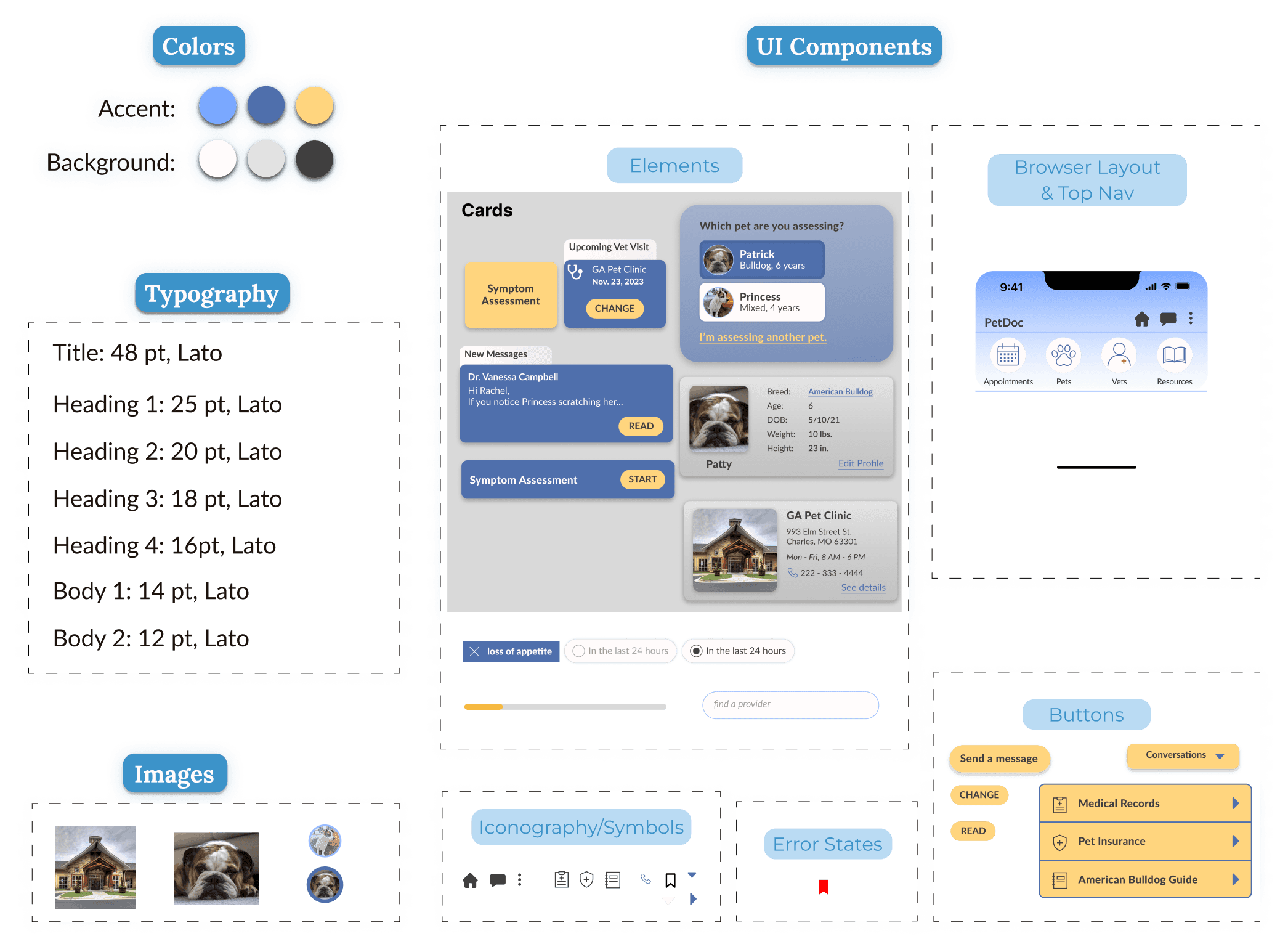
Style Guide
Testing + Reterating
Now, we could finally put our mid-fidelity interactive prototype to the test and ran four usability tests to:
Validate the quality and demand for the existing information presented within the dog breed guide, as well as explore additional topics.
Assess how easily users navigate through the portal and its features by tracking the amount of clicks it took to accomplish a task.
Validate the efficacy of the AI powered symptom assessment.
Not only did all of our users complete the primary tasks with few errors, we were able to gather valuable insights to improve the design, such as the copy and terminology, the global navigation, and the relocation of certain features to improve their discoverability.
View Prototype
Reflection + Next Steps
This project was such a rewarding experience, being able to collaborate so closely with a talented team of UX researchers, designers, and software engineers. Besides having such a tight timeline to design and deploy an original minimum viable product (MVP), I encountered the challenges of cross-functional collaboration, but as a result, I learned how to effectively communicate with developers to smoothly and accurately implement our designs. Another challenge I came across was figuring out how feasible it was to simulate an AI system for the symptom assessment. To address this concern, I collaborated with our developers and found the ChatGPT API that allowed us to implement our feature.
As far as this project’s next steps, I plan to conduct information architecture research to reiterate on the current wireframes to design a high-fidelity, interactive prototype. Another potential next step would be to conduct user research on veterinarians and clinics, as they are the other major end user for our product, to design an administrative view of the product. Additionally, I would like to expand on the guide feature to include, not only information on mixed breeds of canine, but various types of pets.
Back to Top
Snazz - Case Study
Common Agency - Case Study


